
How Music Lessons Help Students With Additional Needs Feel Confident and Thrive
At BMT School of Music, we’ve always believed that everyone can make music – and feel awesome doing it.
That includes children and adults with additional needs such as:
Autism / ASD
ADHD
Dyslexia and other learning differences
Anxiety or low confidence
Physical or coordination challenges
This article looks at why music is so powerful for neurodivergent learners and students with additional needs, what the research says, and how BMT’s one-to-one lessons and studio environment are set up to help them thrive.
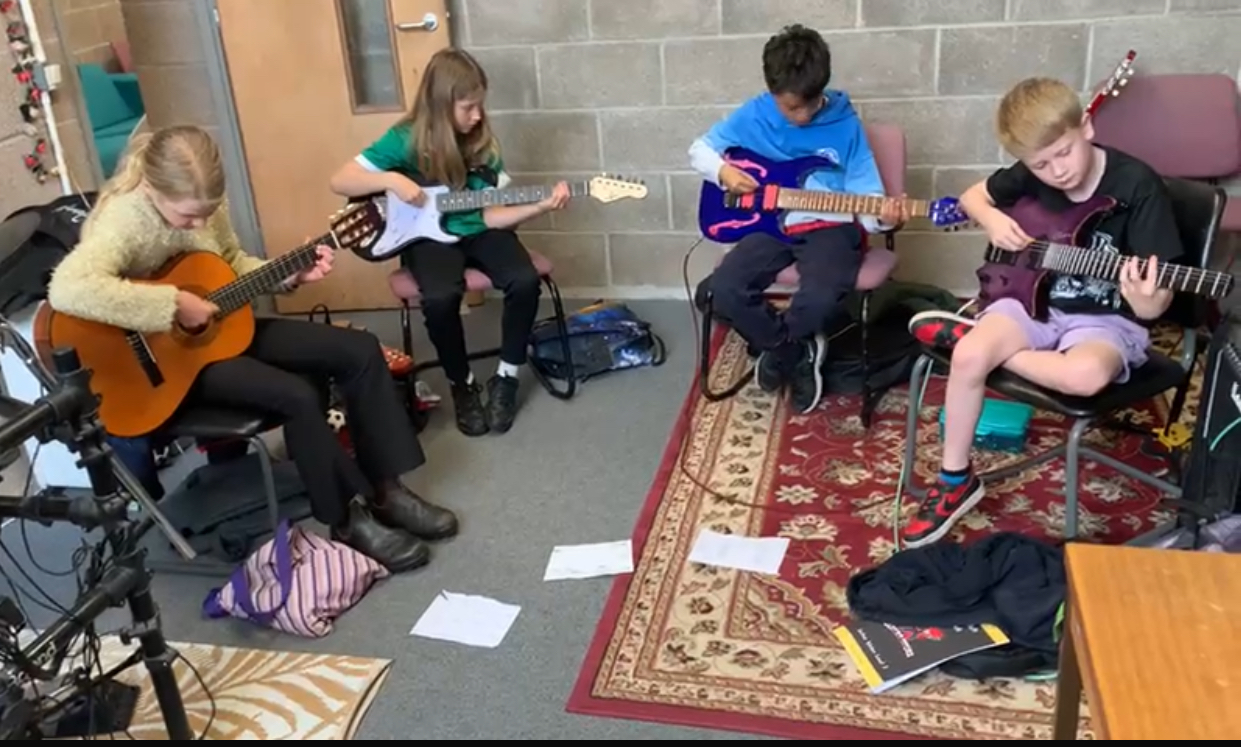
Why music is such a powerful tool for additional needs
1. Music supports social communication and connection
A growing body of research shows that music – especially when it involves active participation like singing or playing an instrument – can support social communication, turn-taking and interaction for autistic children.
One study of individual music interventions found that 8–12 weeks of music sessions improved social communication and brain connectivity in autistic children.
More recent work has shown that music therapy can improve social skills, language communication, sensory perception and daily living skills for children with ASD.
In other words, music isn’t just something “nice” to add on – it can be a core way of connecting, especially for students who may find typical verbal or classroom environments overwhelming.
2. Music can help attention, focus and executive function
For many students with ADHD or attention differences, sitting still and concentrating is hard work. Music seems to give the brain another route into focus.
- Reviews of music interventions for ADHD suggest that both listening to and making music can support attention regulation and reduce some ADHD-related challenges.
- Musical training in children has been linked to improvements in inhibitory control, working memory and cognitive flexibility – key parts of executive function.
Put simply: practising an instrument is like a gym session for the brain – especially the parts responsible for focus, self-control and switching between tasks.
For a child who struggles to focus in school, having one area of life where they can focus – and see the results in real time – is incredibly motivating.
3. Music boosts confidence, mood and emotional resilience
Music also has a powerful impact on mental health and wellbeing:
The American Psychiatric Association highlights that music engagement can support mood regulation and reduce stress-related outcomes.
Research on music and health has found benefits for heart rate, stress hormones, brain stimulation and even immune function.
A 2025 study reported that music therapy can reduce stress, anxiety and depression, while strengthening emotional resilience and social connection.
Active participation in arts and music has been linked to improvements in cognitive and psychosocial functioning, particularly in community settings.
For students with additional needs – who may experience more stress, frustration or social anxiety than their peers – music can become a safe outlet to express emotions and experience success.
4. Music education supports long-term cognitive development
Music education isn’t just “extra.” Studies show that regular music lessons in childhood are associated with:
Better verbal memory and language skills
Stronger reading ability
Improved executive functioning overall
For some neurodivergent learners, progress in traditional academic subjects can feel slow or discouraging. Music offers another route to build the same underlying skills – often with more joy and less pressure.

What this means for students with additional needs
When you put all this together, music lessons can offer students with additional needs:
A structured but flexible activity that can be adapted to their energy and focus level
A way to communicate and express themselves without relying only on words
A weekly space where they can experience success, build mastery and see their own progress
A chance to develop attention, memory, planning and emotional regulation – inside and outside the lesson
And because music is enjoyable and inherently rewarding, students will often work much harder than they realise, simply because they’re engaged and having fun.
How BMT supports students with additional needs
At BMT, lots of our students learn with additional needs in the mix – whether formally diagnosed or not. Our whole approach is designed to meet them where they are.
1. One-to-one lessons, tailored to the student
All lessons at BMT are 30-minute one-to-one sessions. That means:
No pressure to “keep up” with a group
Space to go at their own pace
Freedom to adjust the structure – more breaks, more movement, or more repetition if needed
Teachers can adapt:
The type of activity (e.g. more playing by ear vs. reading, simplified rhythms, or backing tracks for motivation)
The amount of information at once (small steps with lots of reinforcement)
The communication style (clear, concrete language; visual prompts; modelling and mirroring)
2. Patient, experienced tutors who understand neurodiverse learners
BMT teachers are chosen not just for their playing ability, but for their people skills and patience. Many of them have:
Experience working with autistic students, ADHD, anxiety and learning differences
Training and ongoing guidance from BMT on breaking skills down into clear, achievable steps
A shared teaching philosophy focused on:
Positive reinforcement
Flexibility in teaching methods
Helping students feel safe, seen and capable, not judged
BMT’s founder, Sam Blake, has over 20 years’ teaching experience and has worked with hundreds of students – including teaching one student with autism continuously for 14 years, from age 7 into adulthood. That long-term commitment and trust is baked into how BMT works with families.

3. Calm, friendly studios – not intimidating practice rooms
Our studios in Frome, Bradford-on-Avon and Trowbridge are set up to feel:
Welcoming, not clinical
Visually interesting but not overwhelming
Safe spaces where students can:
Take a break
Ask for things to be repeated
Switch activity if their focus drops
Many parents tell us their child is much calmer in the BMT studio than in other busy environments – partly because of the one-to-one focus, and partly because we keep things relaxed and human.
4. Consistent routines (with enough flexibility)
Students with additional needs often do best when they know what to expect.
Our lessons typically follow a familiar pattern:
- A quick check-in and warm-up
- Revisiting something they already know (to build confidence)
- A clear, small new step – a chord, rhythm, bar or section of a song
- Putting it together with backing tracks or a favourite song
- A recap so they leave feeling successful
Within that, teachers can flex the pace, content and difficulty – but the bones of the routine stay similar, which helps a lot with anxiety and transitions.
5. Confidence and self-esteem at the centre
We care just as much about confidence as we do about technique.
For many students with additional needs, school can be a place where they experience:
Repeated comparison
Feeling “behind”
Being told to “try harder”
BMT lessons are deliberately different. We:
Celebrate small wins (“You held that rhythm all the way through the bar – amazing!”)
Help students spot their own strengths (great ear, strong rhythm, excellent memory, creativity, perseverance)
Use performances, recordings and our RockSchool-style events as optional, supportive experiences, not high-pressure exams
Music becomes a place where they feel good about who they are, not where they feel like a problem to be fixed.
6. Long-term relationships, not quick fixes
Progress with additional needs is often non-linear: steps forward, steps back, growth spurts, plateaus.
Because BMT runs lessons year-round, we’re able to:
Support students over many years, not just a term
Ride out tricky phases together – school transitions, exam years, health issues
Build the kind of trust where a student knows: “This is my place. These are my people.”
Those long-term relationships are a huge part of why students stick with music – and why parents feel comfortable knowing their child is understood.
7. Working in partnership with parents and carers
No one knows your child better than you.
We actively invite parents and carers to share:
Triggers or situations that are hard
Sensory preferences (light, sound, touch, seating)
Attention patterns (best time of day, need for breaks)
Reward systems that work at home
Any additional support or diagnoses that might be relevant
We then fold that into the lesson plan so that home and studio work together, rather than in separate boxes.
How to know if BMT is a good fit for your child (or for you)
If you or your child has additional needs and you’re wondering whether music lessons are realistic, here are a few questions that can help:
Do they show any interest in music – tapping rhythms, singing along, noticing tunes, or enjoying certain sounds?
Would a quiet, one-to-one environment feel easier than a big group?
Are you looking for an activity that builds confidence and joy, not just another obligation?
If the answer is “yes” to any of these, there’s a good chance BMT could be a great fit – even if attention, anxiety or previous experiences make you nervous.
Next steps: try a lesson and see how they get on
The best way to find out if BMT is right for your child (or for you as an adult student) is simply to come and try a lesson.
You’ll meet the teacher
See the studios
Give your child a chance to touch the instrument, hear the sounds and feel the space
There’s no pressure to be “good”. Our job is to meet each student exactly where they are and help them take the next small step.
Want to explore this further?
If you’d like to talk specifically about additional needs or reasonable adjustments, just mention it in your enquiry – we’re always happy to chat and figure out what will work best.