
Why Music Lessons Help Kids Break Free From Screens (And Build Real-World Superpowers)

Kids today live in a world full of screens — phones, tablets, TVs, consoles, computers… and most of us adults are just as guilty. And while technology is an incredible tool, it’s becoming clear that constant screen time has some downsides.
Many parents tell us the same things:
Their child struggles to concentrate for long periods
They’re less likely to stick at building a long-term skill
They spend more time indoors, less time being creative
They sometimes lack confidence when everything is “swipe-fast” and instant
That’s the challenging part — but there’s a very positive side too.
Kids still absolutely love learning real, hands-on skills. They just need the right environment and an activity that engages them, challenges them, and gives them something meaningful to be proud of.
And that’s exactly what music does.
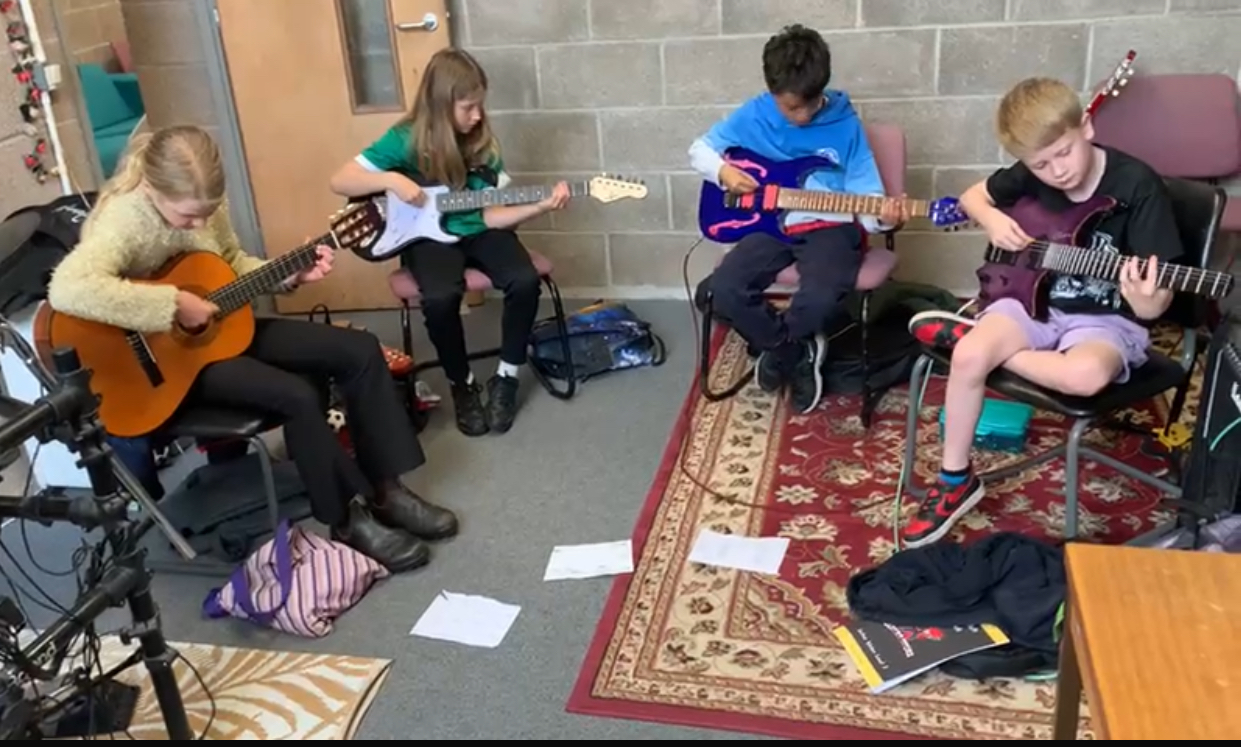
Why Music Lessons Are a Game-Changer (Especially Today)
Music slows things down, builds patience, and boosts focus — but in a way that feels exciting, not boring. It’s one of the few activities where children can unplug, tune in, and create something real.
1. Music builds concentration
Learning an instrument requires listening, repetition, and gentle challenge. Kids naturally settle into a flow state — away from screens and distractions — and begin to focus for longer without even realising.
2. It boosts confidence
There’s nothing quite like seeing a child play their first song. It’s a moment that often surprises them, and it gives them instant proof that they achieved something with their own two hands.
Small wins like this grow into lasting confidence.
3. It teaches perseverance and patience
Music offers something screens don’t: long-term progress. Children learn that sticking with something leads to real results. This builds discipline, resilience, and a healthy sense of pride.
4. It strengthens memory and cognitive skills
Research consistently shows that music improves working memory, spatial awareness, problem solving, and language development. It engages both sides of the brain and supports learning in other areas of life.
5. It gives kids something real to be proud of
Screens provide entertainment; music provides identity. Children begin to see themselves as musicians — as someone who can create, express, and perform. This identity boosts their self-esteem far beyond the lesson room.
A Positive Way Forward
We’re not against technology — we use screens every day, and so do our students. But finding balance is important.
Music lessons give kids a weekly anchor: something creative, hands-on, and truly rewarding. Something that inspires them, challenges them, and helps them grow into confident, capable young people.
If you’ve been thinking about giving your child a healthy outlet — something that improves focus, confidence, and resilience — music is one of the best gifts you can offer.
Ready to See What a First Lesson Looks Like?
You’re welcome to book a no-obligation trial lesson at any of our studios in Frome, Bradford-on-Avon, or Trowbridge.
It’s a friendly, relaxed way for your child to meet a teacher and give music a try.
Book a trial lesson: bmtschoolofmusic.com
Research Highlights (for parents who want deeper reading)
(All titles bolded; study names in italics)
Northwestern University – Auditory Neuroscience Lab (Nina Kraus, 2014–2020):
Long-term musical training improves attention, auditory processing, and neural response consistency in children.Harvard Medical School / Dana Foundation Report (2019):
Music learners show enhanced executive function, working memory, and emotional regulation.UCL Institute of Education (2018):
Regular music participation boosts children’s confidence and social development.American Psychological Association Review (2020):
Music training strengthens perseverance and task-following behaviour — skills often reduced by excess screen time.Journal of Neuroscience – Hyde et al. (2009):
Musical training supports positive brain development in areas linked to motor coordination and auditory processing.
These studies reinforce what we see every week in lessons:
music doesn’t just help kids play songs — it helps them grow.
Book a trial lesson: bmtschoolofmusic.com